
http://cosmiclog.msnbc.msn.com/archive/2008/12/12/1713325.aspx
Archaeology's top 10 finds
12-12-8
Archaeology magazine's top 10 finds of 2008 include Maya paint and ancient poop. And there are bonus finds as well, including a monumental discovery that the discoverers have been trying to keep under wraps.
Most of these revelations haven't gotten the kind of hype that we saw this year for "Indiana Jones and the Kingdom of the Crystal Skull."
"But as much as crystal skulls were the year's most prominent 'artifacts,' we're more likely to remember 2008 as the Year of the Earliest North American Coprolites (ancient human feces), or perhaps the Year of the Imperial Roman Marble Heads," Archaeology's editors wrote.
Read on for a rundown of the real-life discoveries that would make Indiana Jones jump on the next plane - plus the bonus discoveries and a sampling of other best-of-2008 lists in science and technology.
Archaeology's top 10 for 2008:
Mark Rose, Archaeology's online editor, is reluctant to call this list the "best of the year," but these are the reports from the past year that the magazine's editors regarded as relating to the most important discoveries:
The secret of Maya Blue: Scientists analyzed bits of the sacred blue pigment the Maya used during human sacrifices and other ceremonies - and concluded that it was made through the ritual burning of a mix of ingredients, including indigo, minerals and copal incense.
Masked mummy of Peru: An intact 1,700-year-old mummy, bearing a wooden mask with seashell eyes, was discovered in a burial mound beneath a busy Lima neighborhood. Archaeologists suspect the remains were those of a master weaver from Peru's Wari culture, based on the knitting needles and balls of yarn that were buried along with the mummy.
The stone with soul: Researchers found a 2,800-year-old funerary monument in southeastern Turkey that provided a fresh perspective on ancient religious beliefs. A 13-line inscription was chiseled into the basalt stone, in which a high official refers to food offerings that were made "for my soul that is in this stele." This proves that the Iron Age culture believed the soul was separate from the body and could inhabit a monument.
Brown gold from Oregon: About that ancient poop ... the 14,300-year-old preserved feces found in eastern Oregon's cave provided the best evidence yet that humans had colonized the Americas that long ago. Researchers even extracted DNA from the coprolites - which could help clear up longstanding mysteries about the identity of the first Americans.
Oldest oil paintings: Researchers discovered the world's oldest-known paintings in a maze of caves in Afghanistan's Bamiyan Valley - yes, the same place where the Taliban blew up two giant statues of Buddha in 2001. (You'll find more about Bamiyan below.)
The first European? An excavation in a cave in northern Spain turned up a chunk of a Homo erectus jawbone that has been dated back to 1.3 million years ago. That suggests that the ancestors of modern humans made their way into Europe about 500,000 years earlier than previously thought.
The earliest shoes: An analysis of 42,000-year-old human toe bones from a dig in China provided evidence that the person, known as Tianyuan 1, wore some form of footwear.
Pristine Portuguese shipwreck: Geologists working on an underwater diamond-mining project off the coast of Namibia turned up something more scientifically valuable: a 16th-century cargo ship that was buried on the seafloor, safe from underwater treasure hunters. The find netted almost 50 pounds of gold coins, plus navigational instruments, elephant tusks and other treasures.
The colossal heads of the Roman Empire: Archaeologists are uncovering the monumental marble heads of Roman emperors at a dig in central Turkey, where a first-century metropolis once flourished. Last year, Hadrian's head was found at the site of Sagalassos' Roman baths. This year, the researchers recovered fragments of statues depicting Marcus Aurelius and Faustina the Elder (wife of the emperor Antoninus Pius).
The origins of whaling: A 20-inch-long walrus tusk, found at an archaeological site on Russia's Chukotka Peninsula, bears the carvings of a seal, a bear and a boatful of people hunting a whale from a boat. The tusk dates back about 3,000 years, which would make the carving "the earliest evidence for whaling," said Daniel Odess, curator of archaeology at the University of Alaska Museum.
The bonus round:
Archaeology magazine's online editor, Mark Rose, told me that the list doesn't include several important discoveries that just didn't fit the year-in-review pattern (or came to light too late to make the top-10 list). One of the most important finds is a 60-foot-long (19-meter) reclining Buddha statue that was reportedly discovered at Afghanistan's Bamiyan site.
This discovery wouldn't measure up to the fabled 1,000-foot-long (300-meter-long) "sleeping Buddha" at Bamiyan, which was described by a 7th-century Chinese monk but has never been found. Nevertheless, there's "big, big news" out there about a monument that somehow survived the Taliban, Rose said.
The problem is that the head of the archaeological project is trying to keep the discovery under wraps, Rose said. "It ties into a funding organization that is well aware of the marketing value of this kind of thing, as well as the entertainment value," he said. (For what it's worth, the team is funded by National Geographic and the French Foreign Ministry.)
We'll probably hear more about the surviving Bamiyan Buddha next year. But in the meantime, Rose said, "To effectively censor is not really conscionable."
Here are two more of the bonus selections that will be posted to Archaeology's Web site next week:
Disappearing glaciers = reappearing artifacts: Climate change has caused glaciers around the world to recede. During a warm spell in the Swiss Alps, the ice shrank back from the Schnidejoch Pass, revealing shoes, leggings, arrowheads and other artifacts. Some of those artifacts have now been dated back to 4500 B.C., which would make them older than the famous Alpine iceman Oetzi. Rose said the find could shed light not only on ancient cultures, but also on "the ebb and flow of climate."
Stone Age figurines from Russia: Archaeologists excavating a site near Moscow have found figurines and carvings dating back to the Stone Age - somewhere around 10,000 to 40,000 years ago. The artifacts include two female-looking figurines, a mammoth rib inscribed with pictures of what appear to be mammoths, and a mysterious cone-shaped object.
Archaeology's Web site also offers year-end reviews focusing on endangered treasures and the rise of virtual archaeology.
Showing posts with label Indiana Jones and the Kingdom of the Crystal Skull. Show all posts
Showing posts with label Indiana Jones and the Kingdom of the Crystal Skull. Show all posts
Thursday, December 18, 2008

Wednesday, June 4, 2008
LEGO Indiana Jones Video Game
http://www.kidzworld.com/article/13067-lego-indiana-jones-video-game-free-game-download
LEGO Indiana Jones Video Game
Free Game Download
Courtesy of LucasartsWith the new Indiana Jones and the Kingdom of the Crystal Skull rocking theaters with the return of the world's favorite archaeologist-turned-adventurer, Lucasarts wants to give you a dose of his old-skool adventures. A LEGO dose that is. The LEGO Indiana Jones The Original Adventures game takes the first three Indy movies, wraps 'em up into a ball and throws them right at your funny bone. They let you play as the fedora-wearin' dude himself, his friends and even his enemies, through tons of hilarious adventure that will keep reminding you of the award-winning LEGO Star Wars games.
'Indiana Jones' unearths $126M in box office gold
 http://ap.google.com/article/ALeqM5jb68x_tOGx8QHjI0Cr6C-Vy79OGgD90SSR3G2
'Indiana Jones' unearths $126M in box office gold
By RYAN NAKASHIMA
5-25-8
LOS ANGELES (AP) — Indiana Jones unearthed box office gold at domestic theaters with a performance that puts it on track to become the second biggest Memorial Day movie opening ever, according to studio estimates Sunday.
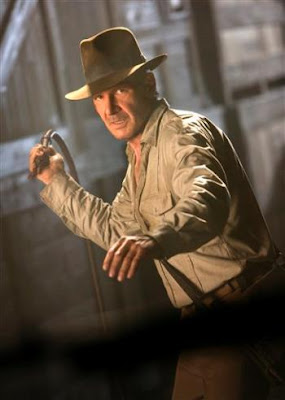
The fourth installment of the whip-cracking professor's exploits, "Indiana Jones and the Kingdom of the Crystal Skull," grossed an estimated $101 million from Friday to Sunday, plus $25 million from its opening Thursday, distributor Paramount Pictures said. The company expects it to earn another $25 million on Monday.
That would put it behind only "Pirates of the Caribbean: At World's End," which had a Friday-through-Monday total of $139.8 million, in the pantheon of Memorial Day weekend blockbusters.
Including Thursday's receipts, "Indiana Jones" was expected to collect $151 million over five days, slightly behind "Pirates," which took in $153 million with a partial Thursday included.
"'Indiana Jones' did incredibly well for a film that comes 19 years after the previous installment," said Paul Dergarabedian, president of tracking firm Media By Numbers LLC.
The adventure flick received a lackluster reception from critics at the Cannes Film Festival, but audiences thought otherwise.
Box office estimates grew from $25 million on its opening Thursday through $37 million on Saturday, suggesting strong word of mouth, Dergarabedian said.
"This is the definition of a summer movie from two of the architects of the summer movie season — George Lucas and Steven Spielberg," he said. "These guys have it down to a science and audiences want to go along for that ride."
The first three Indy movies took in $1.2 billion worldwide.
Saturday, May 10, 2008
Sci Fi Tracks ‘Crystal Skulls’ Mystery
http://www.multichannel.com/article/CA6557339.html
Sci Fi Tracks ‘Crystal Skulls’ Mystery
NBC News Holts Leads Expedition Special, Preceding ‘Indiana Jones’ Stunt
By Mike Reynolds -- Multichannel News
5/5/2008
Looking to draft on the buzz of the upcoming Indiana Jones theatrical, Sci Fi Channel will air the first three installments of the action franchise, as well as an investigative special on May 18.
Sci Fi will bow the Mystery of the Crystal Skulls, hosted by NBC News Lester Holt, May 18 at 9 p.m. (ET/PT) The special gives viewers an insider’s look at the real treasure of Indiana Jones’ newest adventure. Indiana Jones and the Kingdom of the Crystal Skull opens in theaters May 22.
Mystery of the Crystal Skulls explores the true history of the legendary relics, exhuming the myths, legends and controversies surrounding them. Among the questions addressed: Could the skulls be ancient Mayan prophecies of doom, relics from the Lost City of Atlantis, or store a vast knowledge of a highly advanced extraterrestrial civilization?
Holt follows in the footsteps of British explorer and adventurer Frederick Mitchell-Hedges, an inspiration for the fictional Indiana Jones character, whose daughter discovered the first ancient crystal skull in the 1920s in the Mayan ruin of Lubaantun.
Following clues that Homann obtained from Mitchell-Hedges’ daughter and local Mayans, they search for another missing skull while surviving bat-ridden caves and alligator-infested rivers. Along the way, they come across amazing discoveries including a hidden Mayan temple that could house more treasures.
The special will be preceded by the first three “Indy” films: Raiders of the Lost Ark airs May 17 at 4 p.m. and May 18 at 1 p.m,; Indiana Jones and the Temple of Doom runs May 17 at 6:30 p.m. and encore May 18 at 3:30 p.m.; and Indiana Jones and the Last Crusade is slated for May 17 at 9 p.m. and May 18 at 6 p.m.
Indiana Jones and the Savior of a Lost Art
http://www.nytimes.com/2008/05/04/movies/moviesspecial/04raff.html
May 4, 2008
Summer Movies
Indiana Jones and the Savior of a Lost Art
By TERRENCE RAFFERTY
“THIS is a recreational activity for me” is surely among the last things you’d expect to hear from the director of a huge, costly, dauntingly complex summer action movie as it nears completion, with its release date just a few weeks away.
But that is what Steven Spielberg said not long ago, speaking by phone from a dub stage where he was supervising the sound mixing of “Indiana Jones and the Kingdom of the Crystal Skull” (opening May 22), the first new installment in 19 years of the crowd-pleasing adventure-movie franchise that began in 1981 with “Raiders of the Lost Ark.” “In 1989,” Mr. Spielberg said, referring to the year “Indiana Jones and the Last Crusade” came out, “I thought the curtain was lowering on the series, which is why I had all the characters literally ride off into the sunset at the end. But ever since then the most common question I get asked, all over the world, is, ‘When are you going to make another Indiana Jones?’ ”
It’s a fair guess that theater operators and executives at Paramount Pictures have asked that question at least as frequently as the ticket-buying public has, and perhaps with a shade more urgency: the three Indy pictures — “Indiana Jones and the Temple of Doom” (1984) was the one in the middle — have raked in well over a billion dollars worldwide from their theatrical releases alone. The anticipation, on the part of both the fans and the suits, falls somewhere between keen and breathless. And for most filmmakers that level of expectation might appear in their clammier dreams as a giant boulder bearing down on them and picking up speed.
“I’m having a great time,” Mr. Spielberg said. And, unlikely though this may seem, you can’t help believing him; he certainly sounds excited, and the secret of the Indiana Jones movies’ success has always been their free-spirited inventiveness, a what-the-hell quality that can’t (or shouldn’t) be faked, even on a gigantic budget.
Weirdly, authenticity — not faking it — is very much on his mind when he makes one of these unabashedly preposterous movies, whose hero (still played by Harrison Ford) is a two-fisted, bullwhip-wielding academic archaeologist zipping around the globe in search of rare mystical artifacts and in the process running afoul of Nazis, creepy human-sacrifice cults and other exemplars of unambiguous, unadulterated evil.
Even by the extremely flexible standards of high-adventure pulp, the Indy pictures are a pretty stern test of the audience’s willingness to suspend disbelief. (At times you feel as if it were hanging, as the hero periodically does, over a mass of writhing, fang-baring snakes, or a river full of famished crocodiles.) The authenticity Mr. Spielberg is concerned with here is something other than the historical realism of, say, “Schindler’s List” or “Munich”; what he wanted to talk about was the physical integrity of the action, of which there is, in an Indiana Jones movie, plenty.
The tone and style of the films derive from the movie serials of the 1930s and ’40s, which Mr. Spielberg, growing up in the ’50s, used to see on Saturday mornings at a revival theater in Scottsdale, Ariz.
“They made a great impression on me, both because of how exciting they were and because of how cheesy they were,” he said. “I’d kind of be involved in the stories and be ridiculing them at the same time. One week they’d give us a cliffhanger with the good guy going off the cliff, the car crashing on the rocks below and blowing up, and then the next week he’s fine. They forgot to show us the cut of the guy jumping out of the car? That we weren’t going to do in the Indiana Jones series.”
In fact, Mr. Spielberg said, he tries to cut as little as possible in these movies’ action sequences, because “every time the camera changes dynamic angles, you feel there’s something wrong, that there’s some cheating going on.” So his goal is “to do the shots the way Chaplin or Keaton would, everything happening before the eyes of the audience, without a cut.”
Warming to the subject, he went on: “The idea is, there’s no illusion; what you see is what you get. My movies have never been frenetically cut, the way a lot of action is done today. That’s not a put-down; some of that quick cutting, like in ‘The Bourne Ultimatum,’ is fantastic, just takes my breath away. But to get the comedy I want in the Indy films, you have to be old-fashioned. I’ve studied a lot of the old movies that made me laugh, and you’ve got to stage things in full shots and let the audience be the editor. It’s like every shot is a circus act.”
And in 1981, in “Raiders of the Lost Ark,” that approach was so old-fashioned it looked new. (It’s difficult to remember now just how stodgy and joyless the action genre had become; even the James Bond movies, reliably sprightly in the ’60s, turned into slow-footed, campy behemoths in the ’70s with entries like “Moonraker.”)
In the 27 years since, practically every action filmmaker has tried to drink from the grail of Indiana Jones, to tap into the movie’s quasi-mystical kinetic (and commercial) power: the pace had to be blindingly fast; the stunts insanely elaborate, the villainy extra-villainous; the hero’s attitude blithe, insouciant, almost sociopathically cool. Mr. Spielberg and George Lucas — who produces the movies and who dreamed up the basic idea of the series — have a lot to answer for.
The sad truth is that the enormous influence of the Indiana Jones films has been a distinctly mixed blessing. Action movies are, over all, a good deal snappier than they were 30 years ago, but they also tend to be a good deal less intelligible. They skimp on the exposition and go straight for sensation, as if cutting to the chase were not a metaphor but literally the cardinal rule of filmmaking. And that’s true not only of the most egregious Indiana Jones knockoffs — the “Mummy,” “National Treasure” and “Lara Croft” movies spring, unwelcomely, to mind — but of nearly every studio picture that features more action than, say, “My Dinner With André.” It’s no accident that movies of this sort, ubiquitous in summertime, are so often blurbed as “thrill rides”: they can be that exhausting, and that pointless.
Pointlessness is, however, in the eye of the beholder. When asked what kind of films he enjoyed most as a boy, Mr. Spielberg replied, simply, “Anything with a lot of movement,” and quite a few of us would say the same. Swift, thrilling motion is the hook that pulls young imaginations into movies, and although your taste might get a tad more refined over the years, vivid, intricate, ingeniously choreographed action can still give you that Saturday-matinee charge of pleasure.
The perilously long and complicated opening sequence of “Indiana Jones and the Temple of Doom” for example — in which a song-and-dance number (“Anything Goes,” sung in Mandarin) turns into a wild slapstick action scene involving a diamond, a poisoned drink and an elusive vial of antidote, and ends with Indy and his companions jumping out of a plane in a rubber raft — delivers that sort of giddy, mildly deranging stimulation. The staging and the cutting have the “can you top this?” audacity of a silent comedy, and the timing is slyly impeccable: it’s about the length of a Keaton two-reeler.
It hardly matters that the “Anything Goes” set piece was originally planned for “Raiders of the Lost Ark.” The big action scenes in the Indiana Jones movies are almost risibly inorganic to the narratives that contain them. This kind of randomness is risky — not to be tried at home, or by any filmmaker less prodigiously gifted than Mr. Spielberg. You need a rigorous imagination for visual comedy to make movies as exhilaratingly ridiculous as these.
“John Williams and I have a word we use when we have something we think the audience will love,” Mr. Spielberg said, referring to the composer who has scored all the Indiana Jones movies. “Maybe it’ll be a little over the top, and we ask each other, ‘Are we being too shameless?’ In a way I think we’ve both grown kind of proud of being shameless.”
When the jokes are good, as they frequently are in the Indy pictures, there’s every reason for pride. These goofy movies tell you as much about Steven Spielberg as his more serious work does. Movies truly are a form of recreation for him, and he’s the kind of artist who reveals himself fully in the intensity of his play. In the Indiana Jones movies he revives the spirit of silent comedy in the adventures of an intellectual with a bullwhip. And that’s a feat that, whether you think it’s worth doing or not, at least deserves high marks for degree of difficulty. If only everybody else in Hollywood hadn’t tried to imitate him, he’d have nothing to be ashamed of at all.
Thursday, February 21, 2008
'Star Wars: The Clone Wars' due Aug. 15
http://www.calendarlive.com/tv/cl-et-clone13feb13,0,6476102.story
'Star Wars: The Clone Wars' due Aug. 15
The computer-animated film will act as a feature-length preview for George Lucas' new cable television series.
By Geoff Boucher
Los Angeles Times Staff Writer
February 13, 2008
First "Indiana Jones," and now "Star Wars" -- this summer is turning out to be the season of George Lucas.
"Star Wars: The Clone Wars," a new stylized, computer-animated feature film, will open Aug. 15 in theaters and set the stage for a tie-in television series with the same name and mode of artwork that will begin airing as a 30-minute weekly series in the fall on the Cartoon Network and TNT.
The film and series will center on the wartime tales of Anakin Skywalker and Obi-Wan Kenobi and feature Padme Amidala, Mace Windu, Count Dooku and the other characters introduced in the second trilogy of live-action "Star Wars" films that began in 1999.
For casual fans trying to keep track of the timeline, this film and series would take place after the events of the 2002 movie "Attack of the Clones" and right before those in the grimmer 2005 installment "Revenge of the Sith," which shows Anakin succumbing to the dark side of the Force and donning the black cape of Darth Vader.
"I felt like there were a lot more 'Star Wars' stories left to tell," Lucas said in a Tuesday press release. "I was eager to start telling some of them through animation and, at the same time, push the art of the animation forward."
There already was a 2-D animated series called "Clone Wars" that centered on the conflict between the Jedis of the Republic and separatist groups and their battle droids, but this new film and series will be later in the continuity and have a dramatically different look that melds photo-realistic battle sequences (think of an enhanced, top-flight video game) and stylized characters that sometimes resemble marionettes.
Lucas has also said that he is working toward a live-action television series based in the "Star Wars" universe but that it would not feature the central characters of the iconic franchise, which has grossed $4.3 billion in theaters worldwide. "It's about minor characters," the filmmaker told The Times in October. "It has nothing to do with Luke Skywalker or Darth Vader or any of those people. It's completely different. But it's a good idea, and it's going to be a lot of fun to do."
The other famous franchise associated with Lucas is swinging back this year as well. "Indiana Jones and the Kingdom of the Crystal Skull" arrives on Memorial Day and brings the feisty archaeologist of the title back to theaters for the first time since 1989. Lucas, who created the character, is executive producer and shares writing credits with David Koepp. Steven Spielberg returns as the franchise's director.
geoff.boucher@latimes.com
Sunday, January 13, 2008
'08 Movie Preview
http://www.mtv.com/movies/news/articles/1579340/20080109/story.jhtml
Jan 10 2008 7:48 AM EST
'Indiana Jones,' 'Dark Knight' And More Flicks We Can't Wait To See: '08 Movie Preview
'Cloverfield,' 'Iron Man,' 'Wanted' also make our list.
By Shawn Adler
It is impossible to overstate the anticipation we feel for the blockbuster movies coming out in 2008. OK, that's not exactly true. We could say that we'd rather see "The Dark Knight" than peace in the Middle East. That would be an overstatement — but only a slight one!
So with all due exaggeration, embellishment and hyperbole, we present the 10 movies we're most looking forward to in the new year.
10. "Wanted" (June 27)
Unfulfilled SWM in dead-end job in search of position as top-level assassin. Must possess perfect aim and uncanny skill with any weapon. LDR with father OK. Desire for revenge in said father's death a huge plus. Wish to use violence purely for selfish and egocentric pleasures a must — fondness for S&M, D&D not deterrents. No experience necessary. Will train under two of industry's best: the Fox (Angelina Jolie) and Sloan (Morgan Freeman). Prefer TDH but willing to settle for Scottish and geeky (James McAvoy), provided applicant is willing to relocate. Will receive biquarterly reviews from Fates. No smokers.
9. "Cloverfield" (January 18)
Wanna learn all about "Cloverfield"? OK, but I have to ask: Do you know how to keep a secret? Yeah, so does J.J. Abrams. We've heard of making movies behind closed doors, but this is just plain ridiculous. Abrams' new project is so hush-hush it makes Area 51 look like Areas 1-50. In fact, there's not much we know about the flick beyond that it's a monster movie set in New York and that it centers on a group of five friends. Bring your Slusho! — everything is illuminated January 18.
8. "Hancock" (July 2)
Look up in the sky! It's a bird! It's a plane! It's ... the Fresh Prince? The biggest movie star in the world, able to take down box-office records in a single blow, Will Smith returns to the July 4 weekend as a real-life Superman in "Hancock," the story of an abusive, alcoholic, would-be hero that everybody hates. Well, except for the wife of his PR rep, the man out to rehabilitate his image (Charlize Theron and Jason Bateman, respectively). She really doesn't hate him, if you catch our meaning. She really doesn't hate him, like, twice a day if they get the chance. But hey, saving the world means never having to say you're sorry. Might makes right when "Hancock" opens July 2.
7. "The Happening" (June 13)
How's this for a twist? Just two years after "Lady in the Water" made him persona non grata in Hollywood, M. Night Shyamalan basically went door-to-door peddling a new script and found his calling with ... a relationship picture? That's what star Mark Wahlberg called "The Happening," an R-rated story about the planet's last-ditch effort against humanity. The man who would be Hitchcock is back. How'd he do it? Spoiler alert: He was dead the whole time.
6. "Eagle Eye" (August 8)
Everybody wants to be James Bond. But who daydreams of being a James Bond villain? Superspy, meet your super ... student? Shia LaBeouf stars as a young kid mistaken for a terrorist and on the run with Michelle Monaghan in this flick from the mind of Steven Spielberg.
5. "Wall-E" (June 27)
It's R2-D2: The Movie, the story of a Waste Allocation Robot left alone on Earth for centuries to clean up mankind's garbage. It's mostly dialogue-free. It's a Pixar film from the director of "Finding Nemo." Need we say more?
4. "The Curious Case of Benjamin Button" (November 26)
F. Scott Fitzgerald once wrote that there are no second acts in American lives. He believed it so much that he wrote "Benjamin Button" in reverse. The story of a man who's born the moment he dies and who ages backward, Button seems like a dream come true: What if you knew then what you know now? Well, for starters, you'd have a lot of explaining to do to the woman you fall in love with (Cate Blanchett). Some say youth is wasted on the young. We say it's wasted on Brad Pitt, a 44-year-old who still looks like the biggest kid in the candy shop. Under the direction of David Fincher, Pitt enters second childhood (and then oblivion?) November 26.
3. "Iron Man" (May 2)
Movie stars and flashy cars and life with the top down: Billionaire playboy Tony Stark (Robert Downey Jr.) lives the high life. So what do you get for the man who has everything? How about a biometric, weaponized, indestructible suit of body armor that can shoot rockets? And, oh yeah, it can fly. Alongside Terrence Howard as Jim Rhodes and Gwyneth Paltrow as Pepper Potts, the greatest superhero yet to get the movie treatment finally makes his way to the big screen when "Iron Man" opens May 2. Sing it with me: "Now the time is here/ For Iron Man to spread fear." (Cue legendary, kick-ass guitar riff.)
2. "The Dark Knight" (July 18)
Why so serious? What would it take to put a smile on that face of yours? What if we told you that the sequel to the best-ever comic book movie looks even better, with the introduction of the Joker (Heath Ledger) and Two-Face (Aaron Eckhart) into Batman's rogues' gallery. Don't laugh: Ledger's Glasgow smile and sing-song voice make for a terrifying-yet-realistic psychopath, someone who just wants to watch the world burn. Batman (Christian Bale) and the Joker, Harvey Dent and Two-Face — they're two sides of the same coin: costumed freaks who use violence and fear as a means to an end. Heads or tails, we win July 18.
1. "Indiana Jones and the Kingdom of the Crystal Skull" (May 22)
Nineteen years after he last rode into the sunset, the man with the hat is back. Throw me the idol, I'll throw you the most anticipated movie of 2008: "Indiana Jones and the Kingdom of the Crystal Skull." Will there be aliens? A son? A second chance at love with Marion Ravenwood (Karen Allen)? No rats, and definitely no snakes — X marks the spot May 22.
Sunday, September 16, 2007
The latest Indiana Jones movie gets a title
http://movies.yahoo.com/mv/news/va/20070910/118947467900.html
The latest Indiana Jones movie gets a title
Monday September 10, 2007
The battle to name the new Indiana Jones film is over, and the winner is "The Kingdom of the Crystal Skull."
Forget about "Indiana Jones and the City of Gods" or even "Indiana Jones and the Destroyer of Worlds," two of the potential names registered by producers Lucasfilm Ltd. The next movie featuring the two-fisted adventurer will be called "Indiana Jones and the Kingdom of the Crystal Skull."
Actor Shia LaBeouf, who has been cast to play Jones' son in the film, blurted out the title on stage at Sunday's MTV Video Music Awards -- only to have the news overshadowed by two former husbands of Pamela Anderson scuffling with each other and Britney Spears dancing barely clothed on stage.
But Lucasfilm, which is producing the fourth Harrison Ford-starring installment of the Indiana Jones series, was quick to confirm the new title on Monday.
The film is to be directed by Steven Spielberg and is slated for release in May 2008.
LaBeouf's revelation ends months of speculation as to what the new film will be called.
Subscribe to:
Posts (Atom)

 Posts


